


Autism 360: Parenting
3.423.00 Reviews
App Specs
- Version
- 2.0.3250
- Updated On
- License
- Free
- Downloads
- 10,000+
- Developer
- Autism 360
- Categories
- Parenting
- Platform
- Android
Screenshots
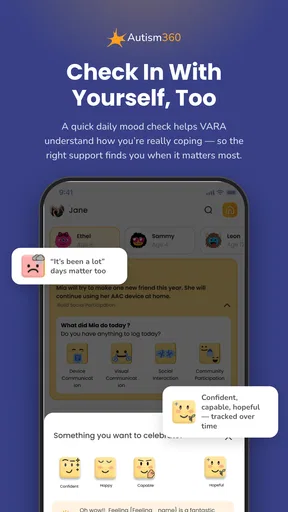
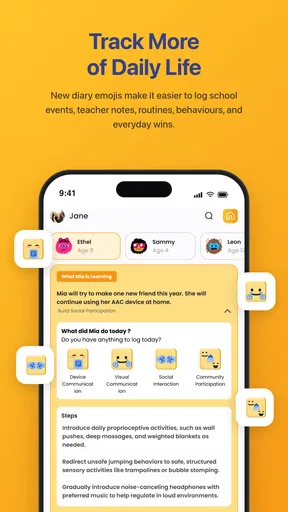
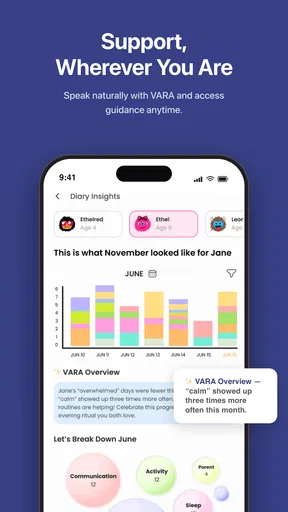
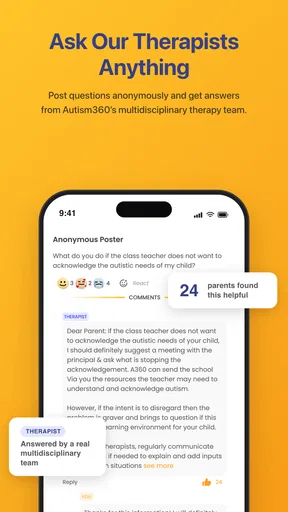
 Analysis by AppCompare
Parenting an autistic child often involves balancing routines, communication, learning, appointments, and the small decisions that fill an ordinary day. Autism 360 is designed as a parenting app for that space, developed by Autism 360 and available as a free download for everyone. I approached it less like a quick reference tool and more like something a parent might keep nearby when trying to make daily support feel more organized.
My overall impression is mixed but useful. The app has a clear purpose and can be worthwhile for parents who want autism-focused guidance in one place, especially if they are still building confidence. At the same time, the average rating of 3.4 from around 91 ratings suggests that the experience has not worked equally well for everyone. That is important context: I would treat it as a supporting resource, not as a replacement for a qualified clinician, school team, or individualized plan.
What Autism 360 is trying to do for parents
The most helpful way to understand this app is as a parenting companion rather than a diagnostic tool. Its store identity is simple—“The Autism Parenting App”—and that focus matters. It is aimed at the person supporting a child at home, not only at professionals working in a clinic or classroom.
That makes the app potentially useful during the moments when a parent needs practical orientation rather than a long technical explanation. For example, a parent may open it after a difficult morning and want to think through a routine, communication challenge, or learning concern with a clearer framework. The value is not necessarily in finding one perfect answer. It is in having a dedicated place to begin thinking.
I also appreciate that the audience is broad enough to include parents at different stages. Someone newly exploring autism-related support may need basic structure and language for conversations with teachers or health professionals. A more experienced parent may use it as a prompt for reviewing what is working at home. Those are different needs, so expectations should remain realistic: an app can help organize questions and ideas, but it cannot understand a child as deeply as the people who know that child personally.
Free access and where paid value enters
The app itself is free to download, which makes trying it relatively low risk. That is its clearest financial advantage. You can decide whether its approach fits your family before committing money, rather than paying upfront for an unfamiliar parenting resource.
There are in-app purchases ranging from $3.99 to $199.99 per item. That is a wide spread, so I would not assume that every useful part is included in the free experience or that every paid option will be worthwhile for every family. The sensible approach is to explore the free access first, understand exactly what the paid material offers, and compare that benefit with resources you already use.
Worth Reading Before You Choose

EA SPORTS FC Mobile 26 Is a Bigger Football Game, but It Takes Time

Flipboard Shows What News Apps Must Do Beyond the Feed

Switching to Android Auto Means Rethinking Your Driving Routine

Google Calendar Makes a Crowded Week Easier to Manage

Ludo King Makes the Most of the Minutes Between Plans

Baby Panda World Brings Quick Play to Modern Phones, but Its Game Library Feels Busy
For me, the important distinction is between free access for evaluation and paid value that still needs to be judged. The presence of a high-priced purchase does not automatically make the app poor value, but it does mean parents should slow down before buying. A premium resource may be reasonable if it provides guidance you will return to regularly. It is harder to justify if you only need occasional general information.
Because the app is rated for Everyone, it is presented as suitable for a broad audience from an age-rating perspective. That should not be confused with a promise that every topic or recommendation will suit every child. Parenting decisions still need adult judgment, and sensitive choices should be discussed with the relevant professionals in your child’s life.
How I would use it in an ordinary week
Imagine a parent preparing for a school meeting after several difficult transitions at home. Instead of opening the app in the middle of a stressful moment and trying to absorb everything, I would use it in short sessions. First, I would identify one issue—perhaps leaving the house or moving from playtime to dinner. Then I would note the situations that trigger difficulty, what the child currently does, and what has already been attempted.
That workflow turns the app into a thinking aid rather than a source of instant solutions. After reviewing relevant guidance, I would choose one small change to try for several days. The key is to observe whether the change makes the routine clearer or less stressful, rather than changing five things at once. This is one of the more useful ways to get value from a parenting app: use it to create a focused experiment, not to collect endless advice.
A second practical use is preparing questions for an appointment. If a topic raises concern, I would write down the exact situation, when it happens, and what support seems to help. The app may give a parent vocabulary for describing the issue, but the notes from real life remain more valuable than a general label. That combination can make a conversation with a therapist, doctor, or teacher more concrete.
I would also avoid handing the phone to a child and expecting the app to become an independent learning solution. Its strongest role is likely to be behind the scenes, helping the adult plan and reflect. Parents should decide which ideas are appropriate, adapt them to the child’s communication style, and stop using an approach that increases distress.
Three details that affect its real usefulness
First, consistency matters more than volume. A parent who spends a few minutes returning to one relevant topic may gain more than someone who browses widely through every available resource. Autism-related parenting can already feel overwhelming, and an app becomes less helpful when it adds another stream of information without a clear next step.
Second, context is essential. Advice that sounds sensible in isolation may not fit a child’s sensory profile, language ability, sleep pattern, medical situation, or family routine. I would treat anything in the app as a starting point to adapt, not as a fixed instruction. A useful question after reading any suggestion is: “What would this look like for my child at home, and how would I know whether it is helping?”
Third, keep a simple record of outcomes. It does not need to be complicated. A parent could note the situation, the change attempted, and what happened afterward. This prevents memory from being shaped only by the hardest moments and helps reveal whether a strategy works in one setting but not another. It also makes professional discussions more productive.
These habits are not flashy features, but they change how an app like this performs in real life. Without them, it is easy to read advice, feel briefly reassured, and then return to the same problem without learning much from the experience.
Where it compares well with familiar alternatives
The usual alternatives are a mixture of search engines, social media groups, books, videos, school resources, and professional appointments. Autism 360 has an obvious advantage over general web searching: its purpose is centered on autism parenting, so a parent does not have to begin with a completely blank search page. That focus can reduce the time spent sorting through unrelated material.
Compared with social media groups, a dedicated app may also feel less noisy. Community discussions can provide emotional support and lived experience, but they can mix excellent suggestions with advice that is too personal, too confident, or unsuitable for another child. I would use parent communities for perspective and companionship, while using this app as one structured source to help organize my own thinking.
Professional support remains stronger when the question involves diagnosis, safety, medication, major behavior changes, or an individualized intervention plan. A therapist or clinician can observe the child, ask follow-up questions, and account for factors an app cannot see. Books can also be better when a parent wants a deep, carefully developed treatment of one subject rather than short visits to several topics.
In other words, the app’s advantage is convenience and focus, not authority in every situation. It sits between casual online browsing and professional care. That middle position is useful, but only when the parent understands its limits.
What may frustrate some families
The rating of 3.4 indicates a fairly ordinary level of satisfaction rather than universal approval. I would not read that number as proof that the app is ineffective, but I would take it as a reason to test the experience personally before spending on optional content. Parents have different expectations, devices, routines, and tolerance for app friction, so one family’s experience may not predict another’s.
The biggest trade-off is likely to be the gap between general guidance and individual need. Autism is not one uniform parenting experience. A suggestion that fits a child who communicates one way may be irrelevant to another child. If you are looking for a detailed plan built around your child’s history, strengths, support needs, and professional assessments, this is not the right tool to use alone.
The purchase range also deserves caution. Free installation is helpful, but it does not tell me that every meaningful resource is free. Before confirming an in-app purchase, I would check whether the material addresses a problem I actually face, whether I am likely to use it more than once, and whether a professional or library resource would provide better depth. Do not treat a large paid option as automatically necessary.
Another limitation is emotional rather than technical. Parents may open an app hoping for certainty during a hard day. No parenting resource can guarantee that a strategy will work immediately. If the content encourages reflection, it may be useful; if it creates guilt because a family cannot follow every suggestion, it has stopped serving its purpose. I would keep only the ideas that are practical, respectful, and sustainable for the household.
Who is most likely to get value from it?
I think the best fit is a parent or caregiver who wants an autism-specific starting point and is comfortable adapting information. It may be particularly helpful for someone who feels unsure about how to frame everyday concerns, wants to prepare for conversations with professionals, or prefers a mobile resource over a printed book.
It can also suit families who want to test a resource without paying at the beginning. Since the download is free, a parent can explore the available experience and decide whether it earns a regular place in the family routine. That trial-first approach is more sensible here than assuming the purchase options will be valuable before seeing how the app fits.
I would be more cautious recommending it to a parent seeking urgent clinical guidance, a complete therapy program, or a highly specialized answer to a complex situation. It is also a weak fit for someone who dislikes self-directed resources and needs a professional to interpret every recommendation. In those cases, the better investment may be an appointment, a school support meeting, or a resource written specifically for the child’s current need.
For grandparents, babysitters, and other caregivers, the app could be useful as background reading, but I would want the child’s primary parent or professional team to decide which ideas are appropriate. Consistency between caregivers matters, and it is better to agree on a small number of shared approaches than for every adult to introduce a different method after browsing separately.
Device expectations and practical details
The app was released on April 22, 2022, and the current version is 2.0.3250. It supports devices running Android 7.0 or later, which covers a broad range of Android phones and tablets. That makes it accessible to people who do not own a recent device, although the experience can still depend on the phone’s screen, storage, connection, and general performance.
Autism 360 has passed 10K installs, so it is not an obscure private experiment, but it is also not a mass-market parenting platform used by everyone. I see that as a reason to judge it by personal usefulness rather than popularity. The average rating and install count provide context, not a substitute for trying the free portion yourself.
Before relying on it during travel, appointments, or a stressful routine, I would open it at home and learn where the material I care about is located. That small preparation can prevent the app from becoming another source of frustration when time is short. I would also avoid making it the only place where important notes are stored; keeping key observations separately is safer for continuity between caregivers and professionals.
My purchase decision and final recommendation
My verdict is to try Autism 360 for free, but keep the decision measured. The app has a clear parenting focus, a low barrier to initial access, and a reasonable role as a source of ideas, reflection prompts, and preparation for real-world conversations. I can see it helping a parent who wants structure without immediately committing to a paid program.
I would not recommend buying the most expensive option simply because it is available. The in-app purchase range is substantial, and paid value depends on whether the material solves a specific problem for your family and offers enough depth to justify the cost. Explore first, identify one concrete need, and only then consider whether a purchase supports that need better than a professional consultation or another trusted resource.
For me, the deciding question is not whether the app can provide every answer. It cannot. The better question is whether it helps you notice patterns, prepare better questions, and make one thoughtful adjustment at a time. If that is what you need, this free parenting app is worth testing. If you need individualized clinical direction, urgent help, or a complete support plan, I would skip relying on it alone and put that effort toward qualified professional support.
Overall, I see Autism 360 as a potentially useful companion with clear boundaries. Its best value comes from careful, selective use—not endless browsing and not automatic trust. Used that way, it may give parents a practical starting point while leaving the most important decisions where they belong: with the child, the family, and the professionals who understand their situation.
Pros
- Offers practical tools for tracking routines
- behaviors
- and developmental progress.
- Provides parent-focused guidance that can support more consistent daily planning.
- Can help organize observations to share during appointments with specialists.
- Designed to make autism-related information easier for families to access.
- Useful for parents seeking structure between professional therapy sessions.
Cons
- Content may not replace personalized advice from qualified healthcare professionals.
- Some features or resources may require a subscription or in-app purchase.
- Parents may need time to learn the app’s tracking and planning features.
- Recommendations may not suit every child’s individual needs or circumstances.
- Regular data entry can feel demanding during already busy family routines.
FAQs for Autism 360: Parenting
What is Autism 360: Parenting, and who is it designed for?
Autism 360: Parenting is a support and education app created for parents and caregivers of children on the autism spectrum. It typically provides structured guidance, learning materials, practical strategies, and tools for understanding behavior, communication, routines, and development. It may also be useful for relatives or educators, although the content is primarily aimed at families managing everyday parenting challenges.
Can Autism 360: Parenting replace professional medical or therapeutic advice?
No. Autism 360: Parenting should be treated as an educational and organizational resource, not as a replacement for a pediatrician, psychologist, speech therapist, occupational therapist, or other qualified professional. Every autistic child has different strengths and needs, so recommendations found in the app may require adaptation. Parents should seek professional guidance for diagnosis, treatment decisions, developmental concerns, or urgent behavioral and health issues.
What kind of content and parenting tools are available in the app?
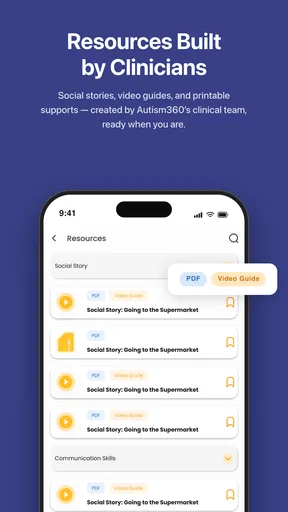
The app focuses on practical parenting support, which may include lessons, articles, videos, activity suggestions, behavior-management ideas, communication guidance, and routines for home life. Depending on the selected plan and current app version, it may also offer progress tracking, personalized recommendations, reminders, or access to expert-led material. Users should review the available sections after installation to confirm which tools are included.
Is Autism 360: Parenting free to download, or does it require a subscription?
The application may be available to download at no initial cost, but some lessons, programs, expert content, or personalization features can require an in-app purchase or recurring subscription. Before starting a trial, carefully check the pricing page, renewal terms, billing frequency, and cancellation instructions shown in your app store. Availability and prices can vary by country, device, and promotional offer.
Is Autism 360: Parenting suitable for every autistic child and family situation?
The app can provide useful general ideas, but it is not a universal solution for every child or family. Autism includes a wide range of communication styles, sensory needs, learning profiles, and support requirements. Some suggestions may work well for one child and not another. Parents should use the material flexibly, respect the child’s individual preferences, and consult qualified specialists when more tailored support is needed.


